Plan G vs Plan N — when choosing a Medicare Supplement plan in Arizona, this is the comparison that matters most. Both plans are popular. Both cover most of what Original Medicare leaves behind. However, they handle office visits and cost-sharing differently. In this guide, you’ll see exactly how Plan G vs Plan N compares — so you can choose the right plan for 2026.
What Plan G and Plan N Both Cover
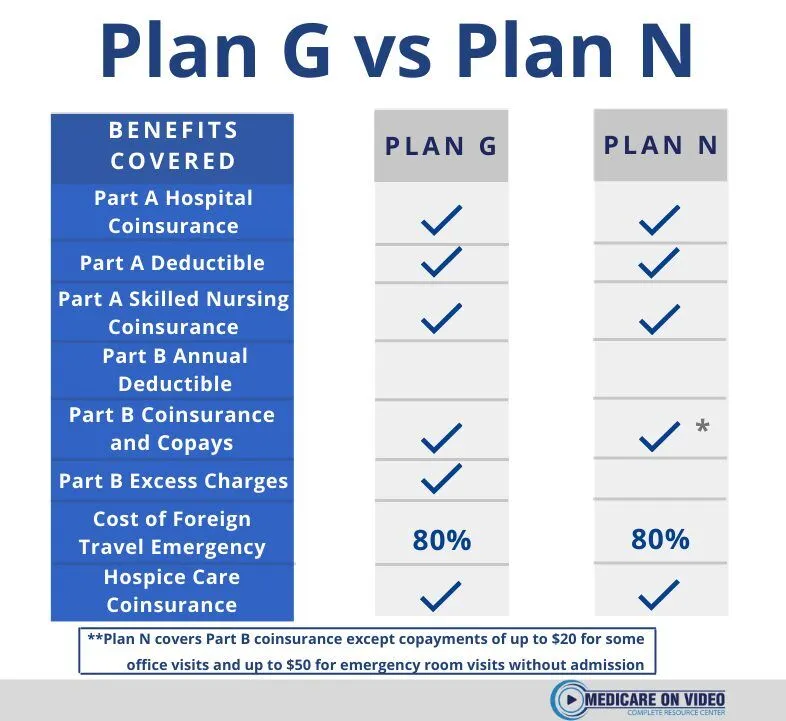
First, it helps to know what these two plans share. Both Plan G vs Plan N cover the following:
Medicare Part A coinsurance and hospital costs
Medicare Part A deductible ($1,676 in 2026)
Medicare Part A hospice care coinsurance
Skilled nursing facility coinsurance
Medicare Part B coinsurance — with one key difference explained below
Foreign travel emergency care up to plan limits
In addition, both plans require you to pay the Part B deductible ($257 in 2026) once per year. After that, coverage kicks in. So far, they look nearly identical. The differences, however, matter a lot depending on how often you use your insurance.
Plan G vs Plan N: The Key Differences
Plan G covers 100% of your Medicare Part B coinsurance. Therefore, after your Part B deductible, you owe nothing for covered outpatient care.
Plan N covers most Part B coinsurance — but not all. Specifically, Plan N has these out-of-pocket costs:
Up to $20 copay per office visit
Up to $50 copay per emergency room visit (waived if admitted)
Part B excess charges — if a doctor doesn’t accept Medicare assignment, you pay the difference between their rate and Medicare’s approved amount
Most Arizona doctors accept Medicare assignment. As a result, excess charges rarely come up. However, the office visit copays do add up if you see doctors often. That’s the core of the Plan G vs Plan N decision.
How Premiums Compare in Arizona
Plan N typically costs $20–$40 less per month than Plan G in Arizona. Therefore, over a full year, you could save $240–$480 in premiums with Plan N.
However, that savings only holds if your copays stay below the premium difference. For example, if you visit the doctor six times per year, that’s up to $120 in Plan N copays. In that case, Plan N still wins on price. On the other hand, frequent visits or ER trips can close the gap quickly.
The bottom line: run the numbers for your situation. That’s exactly what I do for clients at no charge.
Who Should Choose Plan G
Plan G makes the most sense in these situations:
You have ongoing health conditions or frequent doctor visits
You want predictable costs with no copay surprises
You travel often and may see out-of-network providers
You simply want the most comprehensive coverage available
In short, Plan G is the “set it and forget it” option. After your Part B deductible, your costs are done for the year.
Who Should Choose Plan N
Plan N works well in these situations:
You are generally healthy and see a doctor only a few times per year
You want to lower your monthly premium
Your doctors all accept Medicare assignment
You are comfortable paying a small copay at visits
Furthermore, Plan N is a smart choice for people who want solid Medigap coverage without paying for benefits they rarely use.
Plan G vs Plan N: Carriers in Arizona
Both plans are standardized by the federal government. Therefore, the benefits are identical no matter which insurance company you buy from. What differs between carriers is the monthly premium and the company’s rate history.
Whether you choose Plan G or Plan N, timing is critical. When you first enroll in Medicare Part B, you receive a 6-month Medigap open enrollment window. During this period, insurance companies cannot deny you or charge more based on health history.
After this window closes, however, insurers can use medical underwriting. Consequently, pre-existing conditions could affect your options or your premium. This window only happens once. Therefore, if you’re turning 65, get your Medigap plan in place before your birthday month.
I’m Andy Orlikoff, an independent Medicare Supplement broker in Surprise, AZ. I’ve been helping Arizona residents compare Plan G vs Plan N and enroll in the right coverage since 2004. I don’t sell Medicare Advantage — just honest Medigap guidance at no cost to you.
I’ll pull side-by-side quotes from multiple carriers and walk you through the numbers. You decide what fits. I handle the enrollment.
As an independent insurance broker helping Arizona retirees since 2004, I’m seeing a clear pattern this year: more people are asking whether they should stay with Medicare Advantage or switch to something better. After reviewing what’s happening with Advantage plans in 2026, I’m recommending Medicare Supplement Plan G to virtually every client who qualifies. Here’s why.
Why I’m Recommending Medicare Supplement Plan G in 2026
Medicare Advantage plans have been losing ground. In 2026, several major carriers cut benefits, raised copays, and reduced networks. According to Medicare.gov, you can switch plans during open enrollment if yours no longer works for you. A JAMA study found that 1 in 10 Medicare Advantage members was forced off their plan entirely. Meanwhile, Medicare Supplement Plan G hasn’t changed — and that stability is exactly what my clients need.
No Prior Authorization With Medicare Supplement Plan G
One of the biggest frustrations I hear from clients on Medicare Advantage is prior authorization. Before you can have a procedure, the insurance company has to approve it. That approval can take days or weeks — and it can be denied.
With Medicare Supplement Plan G, there is no prior authorization. If Medicare covers a service, Plan G pays. The decision stays between you and your doctor, not an insurance company’s claims department.
See Any Doctor in Arizona — and Across the Country
Medicare Advantage plans restrict you to a network. Step outside it and you pay out-of-pocket — or you’re not covered at all.
Medicare Supplement Plan G works with Original Medicare, which means you can see any doctor in the U.S. who accepts Medicare. In Arizona, that matters for a few specific reasons:
Mayo Clinic Scottsdale accepts Original Medicare — and therefore Plan G. Most Medicare Advantage plans are not accepted at Mayo Clinic.
Snowbird protection — many Arizona clients split time between states. Plan G covers you wherever Medicare is accepted. Your Advantage plan likely doesn’t.
No referrals required — you can see a specialist directly, without waiting for a primary care gatekeeper.
Predictable Costs All Year
Medicare Advantage plans advertise low or zero premiums. However, the real costs show up in copays, coinsurance, and out-of-pocket maximums that can reach $8,000–$10,000 per year if you get seriously ill.
With Medicare Supplement Plan G, your only out-of-pocket cost is the Part B deductible — $257 in 2026. After that, you pay nothing for covered services for the rest of the year. No surprise bills. No anxiety about what the mail brings after a hospital stay.
Plan G Rates in Arizona — What to Expect in 2026
Plan G premiums vary by age and carrier. However, as a general benchmark for Arizona:
Age 65: approximately $100–$150/month
Age 70: approximately $130–$190/month
Age 75: approximately $160–$230/month
Rates for the same plan vary significantly between carriers. As a result, comparing quotes from multiple companies before you enroll can save you $50–$100 per month — with identical benefits. That’s exactly what I do for every client.
The One-Way Door: Why Timing Matters
Here’s what most people don’t know: if you enroll in Medicare Advantage and later want to switch to Medicare Supplement Plan G, you may need to pass medical underwriting. That means insurance companies can deny you or charge more based on your health history.
When you first turn 65 and enroll in Medicare Part B, you have a 6-month open enrollment window where no company can deny you Plan G regardless of health. That window only happens once. After it closes, switching becomes much harder — and sometimes impossible.
If you’re turning 65 or newly enrolled in Medicare, get Plan G in place now, while the door is open.
Ready to Talk About Plan G for 2026?
I’m Andy Orlikoff, an independent Medicare broker based in Surprise, AZ. I don’t sell Medicare Advantage — and I’ll tell you exactly why when we talk. I work with multiple carriers and find the lowest rate for Medicare Supplement Plan G that fits your situation.
Serving Phoenix, Scottsdale, Peoria, Glendale, Surprise, Mesa, Chandler, Gilbert, Goodyear, Tucson, Sun City, and all of Arizona.
Medicare Supplement Plan G is the most comprehensive Medigap plan available to new Medicare enrollees in 2026. If you’re turning 65 or newly enrolled in Medicare, Medicare Supplement Plan G fills nearly every gap Original Medicare leaves behind. In this guide, you’ll see exactly what Plan G covers, what it costs in Arizona, and why most of my clients choose it over every other option.
What Medicare Supplement Plan G Covers
Original Medicare (Parts A and B) is a solid foundation. However, it leaves you responsible for significant out-of-pocket costs — including the 20% coinsurance on doctor visits and hospital stays. Medicare Supplement Plan G steps in and covers those gaps.
Plan G covers all of the following:
Medicare Part A coinsurance and hospital costs — up to 365 days after Medicare benefits are used
Medicare Part A deductible — $1,676 in 2026
Medicare Part A hospice care coinsurance
Skilled nursing facility coinsurance
Medicare Part B coinsurance or copayments — 100% covered after your deductible
Foreign travel emergency care — up to plan limits
The only cost you pay with Plan G is the annual Part B deductible — $257 in 2026. After that, you owe nothing for covered services for the rest of the year.
How Medicare Supplement Plan G Works
Think of Medicare Supplement Plan G as a shield for your savings. Here’s how it works step by step:
You pay the Part B deductible once per year ($257 in 2026)
After that, Plan G pays 100% of your Medicare-approved medical bills
You can see any doctor in the U.S. who accepts Medicare — no networks, no referrals, no prior authorizations
As a result, your healthcare costs for the year are completely predictable. You know your maximum out-of-pocket before January even starts.
Medicare Supplement Plan G vs Other Plans
While other Medigap plans exist, Plan G is the gold standard for new Medicare enrollees. Here’s why:
vs Plan N: Plan N costs less per month but charges copays of up to $20 per office visit and $50 per ER visit. If you see doctors regularly, Plan G often costs less overall.
vs Plan F: Plan F covers the Part B deductible too, but it’s no longer available to new Medicare enrollees after January 1, 2020. Plan G is the closest equivalent.
vs Medicare Advantage: Medicare Advantage plans often have networks, prior authorization requirements, and annual plan changes. Plan G works with Original Medicare — no networks, no surprises.
Medicare Supplement Plan G and Mayo Clinic
One of the most important differences between Plan G and Medicare Advantage is hospital access. Mayo Clinic Arizona accepts Original Medicare — and therefore accepts Plan G. Most Medicare Advantage plans, however, are not accepted at Mayo Clinic.
If keeping access to major specialty hospitals matters to you, that distinction alone makes Plan G worth considering.
The Enrollment Window for Medicare Supplement Plan G
When you first enroll in Medicare Part B, you have a 6-month open enrollment window for Medigap. During this period, insurance companies cannot deny you Medicare Supplement Plan G or charge more based on your health history.
After this window closes, insurers can use medical underwriting. Consequently, pre-existing conditions could affect your eligibility or premium. This window only happens once — so timing matters.
If you’re turning 65, get your Plan G in place before your birthday month. Don’t wait.
What Does Medicare Supplement Plan G Cost in Arizona?
Plan G premiums vary by age, gender, and carrier. However, as a general benchmark for Arizona in 2026:
Age 65: approximately $100–$150/month depending on carrier
Age 70: approximately $130–$190/month depending on carrier
Age 75: approximately $160–$230/month depending on carrier
Rates for the same plan can vary significantly between carriers. Therefore, comparing quotes from multiple companies before you enroll can save you $50–$100 per month — with identical coverage.
Get a Free Medicare Supplement Plan G Quote in Arizona
I’m Andy Orlikoff, an independent Medicare Supplement broker based in Surprise, AZ. I’ve been helping Arizona residents enroll in Medicare Supplement Plan G since 2004. I compare rates from multiple carriers and walk you through your options at no cost to you.
Your premium is the same whether you use a broker or go direct. You’re just getting 20+ years of Arizona experience at no charge.
If you’ve spent the last year realizing that Medicare Advantage isn’t working for you — prior authorization denials, limited networks, surprise bills — you’re not alone. Thousands of Arizona seniors make the switch back to Original Medicare every year. In this guide, you’ll learn exactly how to switch from Medicare Advantage to Original Medicare, what windows are available, and what to watch out for.
Why People Switch from Medicare Advantage to Original Medicare
The most common reasons I hear from clients who want to switch from Medicare Advantage to Original Medicare:
Their doctor left the plan’s network
Prior authorization delays for procedures or specialists
Moving to a different part of Arizona or another state
Wanting access to Mayo Clinic or a major specialty hospital
High out-of-pocket costs after a serious illness
The plan’s benefits changed significantly at renewal
When Can You Switch from Medicare Advantage to Original Medicare?
There are two main windows to switch from Medicare Advantage to Original Medicare. Missing these windows means waiting until the next opportunity.
Medicare Advantage Open Enrollment Period (MA OEP)
January 1 – March 31 every year. During this window you can switch from one Medicare Advantage plan to another, or drop Medicare Advantage entirely and return to Original Medicare. Coverage changes take effect the first of the following month.
Annual Enrollment Period (AEP)
October 15 – December 7 every year. This is the main Medicare enrollment window. You can drop your Medicare Advantage plan and return to Original Medicare, with changes taking effect January 1. According to Medicare.gov, this is the primary window for making coverage changes.
The One-Way Door Problem: Medical Underwriting
Here’s the critical issue most people don’t know about when they try to switch from Medicare Advantage to Original Medicare: returning to Original Medicare is only half the equation.
Once you’re back on Original Medicare, you’ll want a Medicare Supplement (Medigap) Plan G to cover your out-of-pocket costs. But outside of your original 6-month Medigap open enrollment window, insurance companies can use medical underwriting — meaning they can deny you coverage or charge higher premiums based on your health history.
This is why I always tell clients: if you’re on Medicare Advantage and thinking about switching, do it sooner rather than later. The longer you wait, the more your health may change, and the harder it becomes to qualify for Medigap.
Special Enrollment Periods for Switching
In some situations you may qualify for a Special Enrollment Period (SEP) to switch from Medicare Advantage to Original Medicare outside the standard windows:
You moved out of your plan’s service area
Your plan is leaving the Medicare program
You qualify for Extra Help (Low Income Subsidy)
You were misled by your plan or agent
The Social Security Administration and Medicare handle these situations case by case. If you think you qualify, act quickly — SEP windows are typically 60 days.
Step-by-Step: How to Switch Back to Original Medicare
Confirm you’re in an eligible enrollment window (MA OEP, AEP, or SEP)
Contact your Medicare Advantage plan to disenroll — call the number on your plan card
Confirm your return to Original Medicare Parts A and B
Apply for a Medicare Supplement (Medigap) plan — do this simultaneously if possible
Sign up for a Part D prescription drug plan if you need one
Ready to Switch? I Can Help
I’m Andy Orlikoff, an independent Medicare broker in Surprise, AZ. I don’t sell Medicare Advantage — and I help Arizona seniors navigate the process to switch from Medicare Advantage to Original Medicare and get enrolled in the right Medigap plan. My help costs you nothing extra.
If you’ve been searching for “Medicare Part G,” here’s the clarification: there is no Medicare Part G. What you’re looking for is Medicare Supplement Plan G — also called Medigap Plan G. It’s the most comprehensive Medicare supplement available to new enrollees in 2026, and most independent brokers consider it the gold standard for a reason. Here’s exactly what it covers and why it stands out.
What Is Medicare Supplement Plan G?
Medicare Supplement Plan G is a Medigap plan that fills in most of the gaps Original Medicare leaves behind. Think of Original Medicare (Parts A and B) as a solid foundation with some expensive holes — 20% coinsurance on doctor visits, a $1,676 hospital deductible, and no out-of-pocket maximum. Medicare Supplement Plan G patches nearly all of those holes.
It’s sold by private insurance companies but standardized by the federal government, so the benefits are identical regardless of which company you buy from. What differs is the monthly premium — and that’s where comparison shopping matters.
What Plan G Covers in 2026
Medicare Supplement Plan G covers the following in 2026:
Part A deductible — $1,676 per benefit period
Part A coinsurance and hospital costs — up to 365 days after Medicare benefits are used
Part A hospice care coinsurance
Skilled nursing facility coinsurance
Part B coinsurance or copayments — 100% covered after the Part B deductible
Part B excess charges — if a doctor charges more than Medicare allows, Plan G covers the difference
Foreign travel emergency care — up to plan limits
The only cost you pay with Medicare Supplement Plan G is the annual Part B deductible — $257 in 2026. After that, you owe nothing for covered services for the rest of the year. No copays, no coinsurance, no networks.
Why Plan G Is the 2026 Gold Standard
Plan G replaced Plan F as the top-tier Medigap option when Plan F was discontinued for new enrollees in 2020. The only difference between Plan F and Plan G is the Part B deductible — Plan F covered it, Plan G doesn’t. Since the deductible is only $257 per year, and Plan G premiums are typically $30–$50 less per month than Plan F, Plan G almost always wins on math.
According to Medicare.gov, Plan G is one of the most comprehensive Medigap plans available and one of the most widely purchased by new Medicare enrollees.
Plan G vs Plan N: Which Is Right for You?
The most common comparison is Medicare Supplement Plan G vs Plan N. Plan N has lower premiums but adds:
Up to $20 copay per office visit
Up to $50 copay per emergency room visit (waived if admitted)
No coverage for Part B excess charges
If you’re healthy and see doctors infrequently, Plan N may save you money. If you want maximum simplicity and predictability, Medicare Supplement Plan G is the better choice. I compare both for every client and let the numbers speak.
Mayo Clinic Coverage With Medigap
Mayo Clinic Arizona accepts Original Medicare — and therefore accepts Medicare Supplement Plan G. Most Medicare Advantage plans are not accepted at Mayo Clinic. If access to major specialty hospitals matters to you, Plan G is your path.
Get a Free Medigap Quote in Arizona
I’m Andy Orlikoff, an independent Medicare broker in Surprise, AZ. I’ve been helping Arizona seniors enroll in the right Medigap plan since 2004. I compare rates from multiple carriers and find you the lowest premium for identical coverage.